
How to send condolences via text messages sincerely and tactfully
In modern life, the act of condolences via text messages has become a common way to express empathy and share the pain of loss. This is a quick and convenient way, especially when you cannot visit in person. However, for condolence messages to be received sincerely and without misunderstanding, you need to know how to express them in a way that suits the recipient’s culture and state of mind.
Besides that, in today’s society, topics such as how to create a credit card or job postings also receive a lot of attention. However, when sending condolences via text messages, you should focus entirely on conveying sympathy, avoiding mixing in other topics to maintain solemnity and dignity for the recipient.
Learn how to send condolences via text messages in a tactful and sincere way at hay88 to comfort your loved ones in time.
Learn how to send condolences via text messages in a sincere and tactful way at mu88.
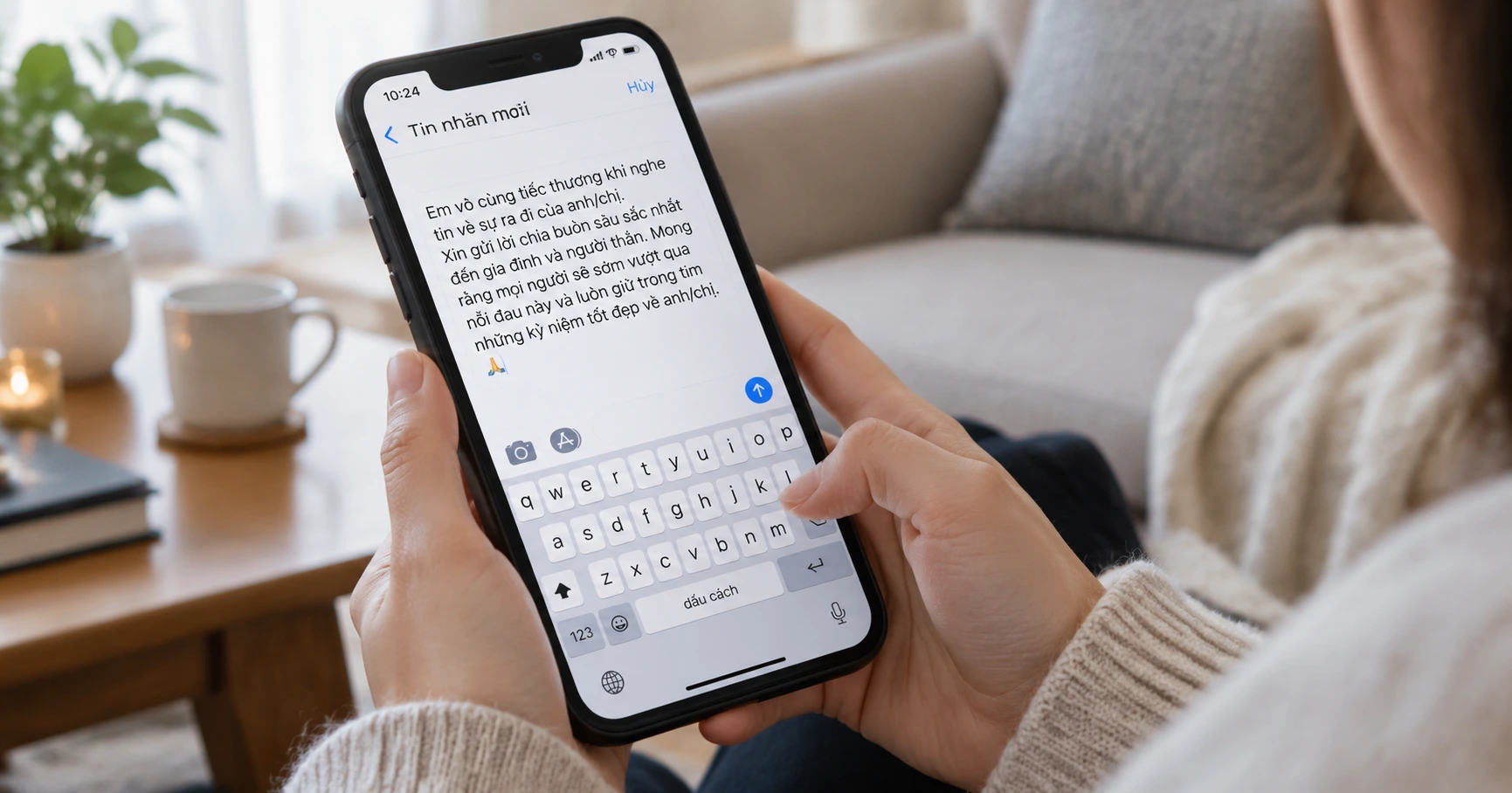
Things to note when sending condolences via text messages
In Vietnamese culture, the act of condolences via text messages is not only an act of sympathy but also a way to preserve tact and respect for the deceased and their family. You should avoid overly complex or cliché wording; instead, use sincere, simple phrases. In addition, the timing of the message is also very important, so avoid sending it too early or too late relative to when the event happened.
Choosing appropriate words also needs to pay attention to spiritual factors and local customs. For example, you should avoid statements that may be seen as what is superstition or that feel imposing, making the recipient uncomfortable during their grief. This helps your condolences be received more sincerely and deeply.
In addition, you should also consider your relationship with the recipient. If it is a friend or colleague, you can use more familiar, casual language. If it is a relative or superior, you should keep the message formal and polite.
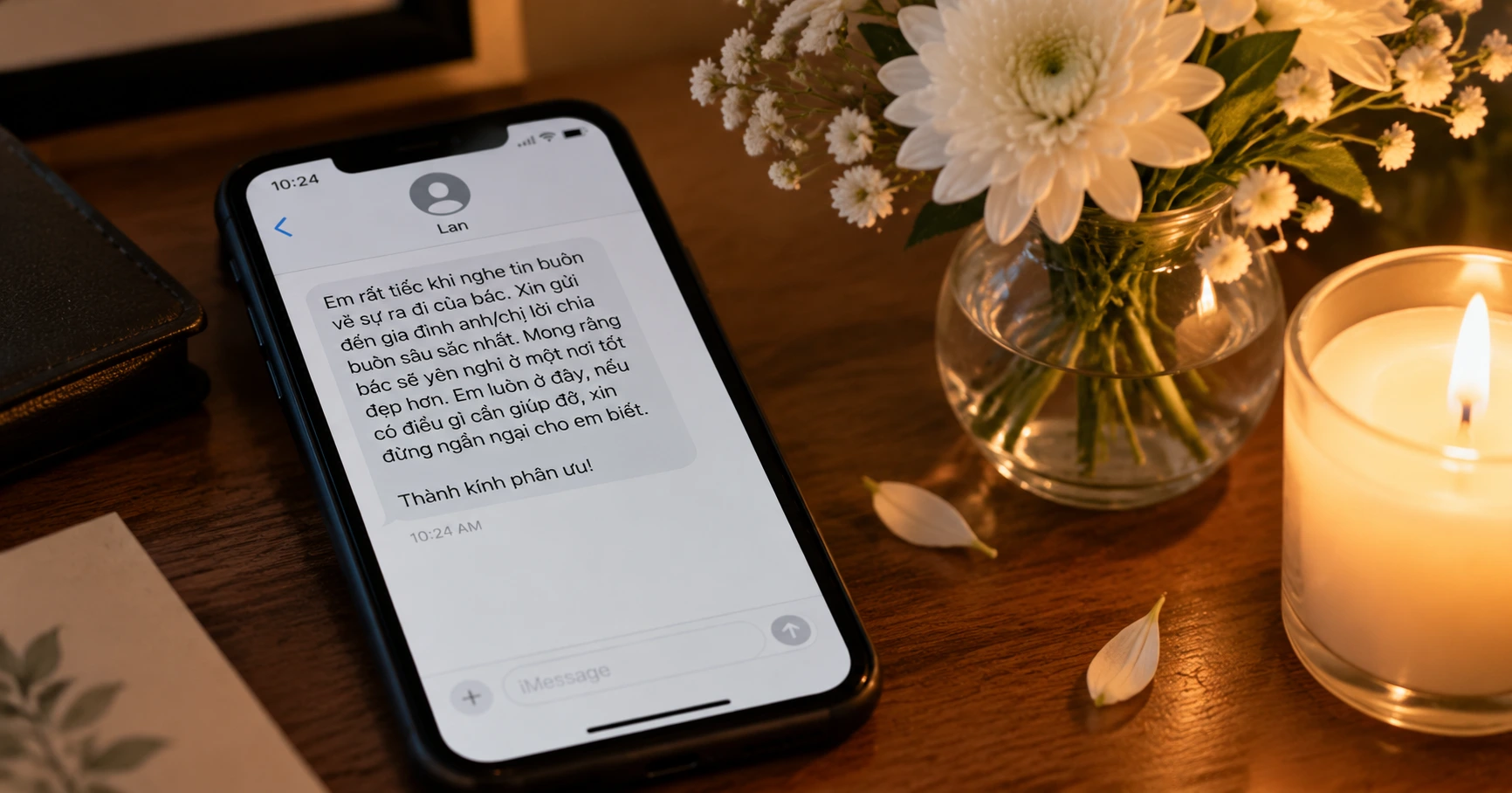
How to create emotion in condolence messages
To make condolence messages meaningful and touch the recipient’s heart, you can combine cultural and emotional elements such as prayers, sharing beautiful memories of the deceased, or expressing sympathy. For example, you can mention avoiding things what is superstition so as not to make the recipient feel uncomfortable or under extra pressure during their grief.
Combining local culture in condolences
Vietnamese people place great importance on traditional funeral rites, so in a message, you can gently mention showing respect and remembrance according to local customs to create closeness. For example, you can mention lighting incense or preserving the teachings of the deceased as a way to show reverence and remembrance.
Using simple, easy-to-understand language
Using short sentences and avoiding complex wording helps make your message friendlier and easier to receive, especially when the recipient is in a sensitive emotional state. A gentle, sincere message will help the recipient feel comforted and not pressured to reply immediately.

At the same time, you can also add a few gentle questions or offers of support if needed, to show deeper care. However, avoid asking anything too personal or awkward at this time.
Vietnamese culture and the world of condolence messages
In the digital age, condolences via text messages has become more common, especially among young people and in urban areas. However, many people still keep the habit of calling or visiting in person to offer condolences. Which form to choose depends on the relationship and the specific situation. A flexible combination of tradition and modernity helps preserve cultural beauty and deep empathy.
Especially in the context of an epidemic or long geographical distance, sending condolences via text message becomes an optimal solution to stay in touch and show care. However, you should also carefully consider the content and wording to avoid misunderstandings or seeming insincere.
In addition, understanding and avoiding things considered what is superstition in Vietnamese funeral culture is also very important when sending condolences via text message. This helps you show respect and sensitivity to the recipient's feelings, while preserving the beauty of traditional culture.
Sample condolence message table
| Condolence message | Usage situation |
|---|---|
| Please accept my deepest condolences to your family during this difficult time. May your loved one's soul rest in peace. | Loss of a close loved one |
| I hope you and your family stay strong and get through this pain. If you need anything, I am always ready to be by your side. | Friends, colleagues |
| May light and peace come to the soul of the departed. | Loss of a loved one |
| I am very sorry to hear this sad news. If you need someone to talk to or any help, please do not hesitate to contact me. | Close friend, acquaintance |
| Please accept my deepest condolences to your family. I hope all good things will come to you during this difficult time. | Colleagues, casual acquaintances |
Frequently asked questions about sending condolences via text message
1. Should condolences be sent via text message in all cases?
This condolences via text messages is appropriate when you cannot come in person or when the relationship is not too close. However, in close cases or in traditional culture, calling or visiting in person is still regarded more highly.
2. How can you avoid misunderstandings when sending condolences via text message?
You should use simple language, avoid words that could be misunderstood or seem superstitious. At the same time, show sincerity and avoid clichés or vague statements. It is best to personalize the message based on the relationship and the specific situation.
3. Can you combine sending condolences and asking about how to create a credit card or job postings in the same message?
You should not combine these topics in the same condolence message because it will reduce the solemnity and may make the recipient uncomfortable. Keep the condolence message purely focused on showing respect and empathy.